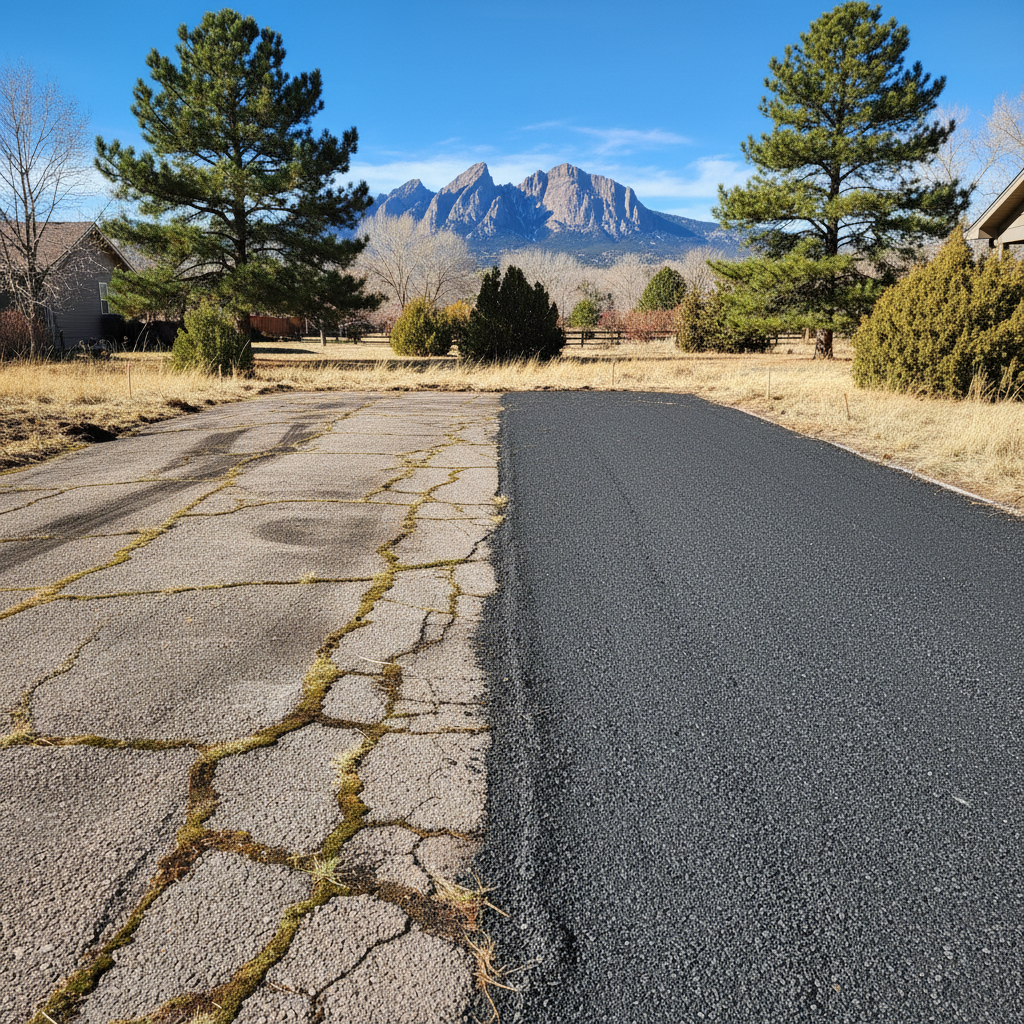
Alright, let's talk about asphalt milling. If your driveway's seen better days – maybe it's got cracks, ruts, or just looks tired – milling is often the first step before we put down new asphalt. But it's not a one-size-fits-all deal, is it? You're usually looking at two main approaches: cold planing (some folks call it surface milling) or full-depth milling. Knowing the difference can save you a real headache and a good chunk of change.
Cold Planing: The Surface Fix
Cold planing is exactly what it sounds like: we're milling off just the top layer of your existing asphalt. Think of it like a big, powerful planer shaving down the surface. We usually take off anywhere from 1 to 4 inches, depending on how bad the surface damage is and what we're trying to achieve. The goal here is to remove that worn-out, cracked, or uneven top layer, creating a fresh, stable base for a new asphalt overlay.
Cost & Time
This is usually the more budget-friendly option upfront. Since we're not digging deep, it takes less time, uses less fuel, and generates less waste material. Less labor, less disposal. For many Boulder homeowners, especially if your driveway is relatively new but showing surface fatigue from our freeze-thaw cycles, cold planing is a smart move. It's quicker, too, meaning less disruption to your daily routine.
Durability & Maintenance
The durability of a cold-planed surface really depends on the condition of the layers underneath. If your base is solid and the issues are truly just surface-level, a new overlay on a cold-planed surface can last a good 10-15 years with proper maintenance like sealcoating every few years. The key is that the underlying structure has to be sound. If there are deep structural problems, cold planing is just a band-aid. Maintenance is standard: keep it clean, sealcoat, and address cracks quickly.
Appearance
Once we put down a new layer of asphalt, it's going to look great – smooth, black, and fresh. The milling itself leaves a textured, grooved surface, which is perfect for bonding with the new asphalt. You won't see that texture once the new layer is down, of course.
Full-Depth Milling: The Rebuild
Now, full-depth milling is a whole different beast. This is when we mill down through the entire asphalt layer, right down to the sub-base. Sometimes we even go a little into the sub-base if it's contaminated or unstable. We're essentially removing all the old asphalt pavement to get back to a clean slate. This is the choice when your driveway has significant structural issues – deep potholes, extensive alligator cracking that goes all the way through, or a failing sub-base.
Cost & Time
As you can imagine, this is a bigger project and costs more. We're removing a lot more material, which means more time on the job, more equipment, and higher disposal fees. It's a more involved process, so expect it to take longer. But if your driveway is truly failing from the bottom up, this is the only real solution that will last. Trying to cold plane over a completely failed base is just throwing money away, honestly.
Durability & Maintenance
When done right, full-depth milling followed by a new asphalt installation gives you a driveway that's essentially brand new. You're building from the ground up, ensuring a strong, stable foundation. This means maximum durability, often 15-20 years or more, especially with good maintenance. You're addressing the root cause of the problems, not just the symptoms.
Appearance
Just like with cold planing, the final appearance after a new asphalt layer is smooth and pristine. The milling process itself is more aggressive, but the end result is a completely rebuilt, fresh surface.
Which One for Boulder Homeowners?
Here's the deal for us in Boulder. We get some pretty intense weather. Hot summers, cold winters, and plenty of freeze-thaw cycles. We also have varied soil conditions, from the sandy loam near the foothills to the more expansive clays in other areas. This means your sub-base can take a beating.
- Go with Cold Planing if: Your driveway's issues are mostly on the surface – minor cracking, rutting, or fading. The underlying asphalt and sub-base feel solid when you walk or drive on them. You're looking for a cost-effective way to refresh your driveway and extend its life.
- Go with Full-Depth Milling if: You've got widespread, deep alligator cracking, significant potholes, or areas where the asphalt is crumbling and sinking. If your driveway feels spongy or unstable in places, that's a strong sign of sub-base failure. This is an investment in a long-term solution.
Honestly, for many of the older driveways around neighborhoods like Newlands or Martin Acres that haven't had much love, full-depth milling is often the smarter play. You're fixing the problem for good. But if your driveway is relatively young and just showing wear from our sun and snow, cold planing can be a great option.
The best way to know for sure? Get a pro to take a look. We'll come out, assess your driveway's condition, and give you an honest recommendation. We've seen it all at Boulder Asphalt Pros, and we're here to make sure you get the right fix for your home, not just the most expensive one.