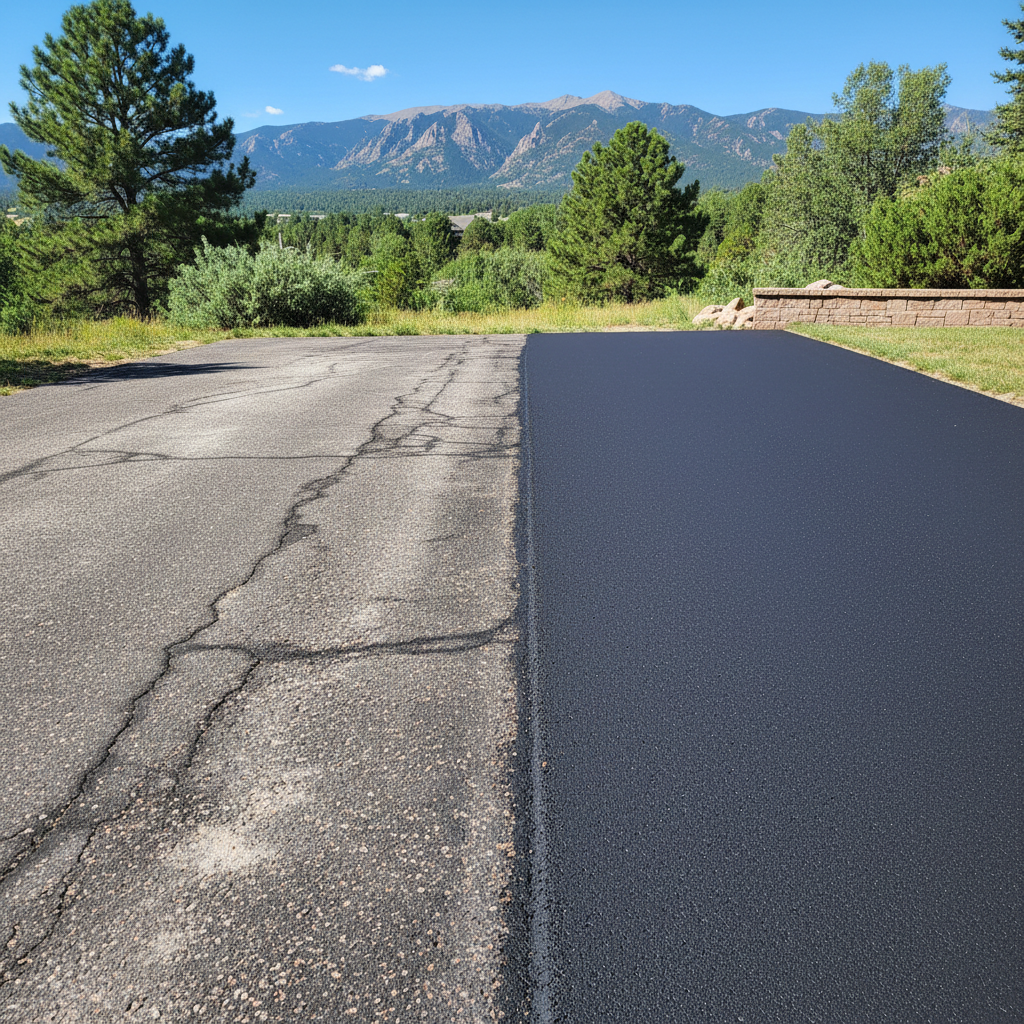
Your driveway takes a beating, especially here in Boulder. Between the freeze-thaw cycles, the intense summer sun, and just plain old wear and tear, it's bound to show its age eventually. When it does, you're usually looking at two main options for getting it back in shape: an asphalt overlay or a full tear-out and replacement. I get asked about this all the time, so let's dig into what each one means for your home.
What's an Asphalt Overlay?
Think of an asphalt overlay, or resurfacing as some folks call it, like giving your driveway a fresh new skin. We're talking about laying a new layer of hot asphalt directly over your existing one. It's not just dumping asphalt on top, though. First, we'll prep the old surface by cleaning it thoroughly, filling any significant cracks or potholes, and sometimes applying a tack coat to help the new layer bond. Then, we pave a new layer, typically 1.5 to 2 inches thick, right over the top.
When is an Overlay a Good Idea?
An overlay is a fantastic option if your existing driveway is still structurally sound. What does that mean? It means you don't have widespread, deep cracks that go all the way through, or significant areas of alligator cracking that indicate a failed base. If you've got minor surface cracks, fading, or just a generally rough texture, an overlay can make it look brand new without the full demolition.
What's a Full Asphalt Replacement?
A full replacement is exactly what it sounds like. We come in, tear out every single bit of your old driveway – down to the dirt. Then, we assess the subgrade, make any necessary improvements to the base layer (which is crucial for long-term durability, especially with our expansive clay soils around areas like South Boulder), and then lay down a completely new asphalt driveway from scratch. This usually involves two layers of asphalt: a thicker base course and a thinner top course.
When Do You Need a Full Replacement?
You're probably looking at a full replacement if your driveway has seen better days, and I mean *really* better days. We're talking about extensive alligator cracking, deep potholes that keep coming back, significant areas of sinking or upheaval, or drainage issues that are causing water to pool. These are all signs that the problem isn't just on the surface; it's deep down in the base layer. Trying to put an overlay on top of a failing base is like putting a fresh coat of paint on a rotting fence – it'll look good for a minute, but the underlying issues will quickly resurface.
Cost: The Bottom Line
Let's be real, cost is a big factor for most homeowners. Generally speaking, an asphalt overlay is going to be significantly less expensive than a full replacement. You're saving on demolition costs, hauling away old material, and often on the amount of new material and labor required. It's a more efficient process. A full replacement is a bigger investment upfront, but it's an investment in a completely new foundation for your driveway.
Durability & Lifespan
A well-done asphalt overlay can add another 8-15 years to your driveway's life, assuming the underlying structure was good to begin with. It's a solid refresh. A full replacement, however, when done right with proper base preparation, can last 20-30 years or even longer. You're building something entirely new, so you're resetting the clock on its lifespan.
Maintenance & Appearance
Both options benefit from good maintenance, primarily sealcoating every 2-5 years to protect against UV rays and water penetration. An overlay will immediately give you that smooth, dark, fresh-paved look. A full replacement will give you the same, but it's starting from zero, so you're getting a brand-new surface and a perfectly stable base underneath.
My Recommendation for Boulder Homeowners
Here's the deal: if your driveway has minor surface issues – a few cracks, some fading, but feels solid when you drive on it – an asphalt overlay is probably your best bet. It's cost-effective, relatively quick, and will give you years of good service. It's a great way to extend the life of a healthy driveway.
However, if you're seeing widespread structural problems – big potholes, major cracking, or areas that are constantly sinking or heaving (which we see a lot with the clay and expansive soils we deal with here in Boulder, especially in older neighborhoods like Newlands or Martin Acres), then you're really looking at a full replacement. Don't try to bandage a fundamentally broken driveway with an overlay; you'll just be throwing money away. It's better to bite the bullet, get it done right, and enjoy a truly long-lasting solution.
The best way to figure out what's right for your specific situation? Have a pro come take a look. We can assess the condition of your existing asphalt and your subgrade, and give you an honest recommendation. Give Boulder Asphalt Pros a call, and we'll walk you through your options, no pressure. We want you to make the best decision for your home and your budget.