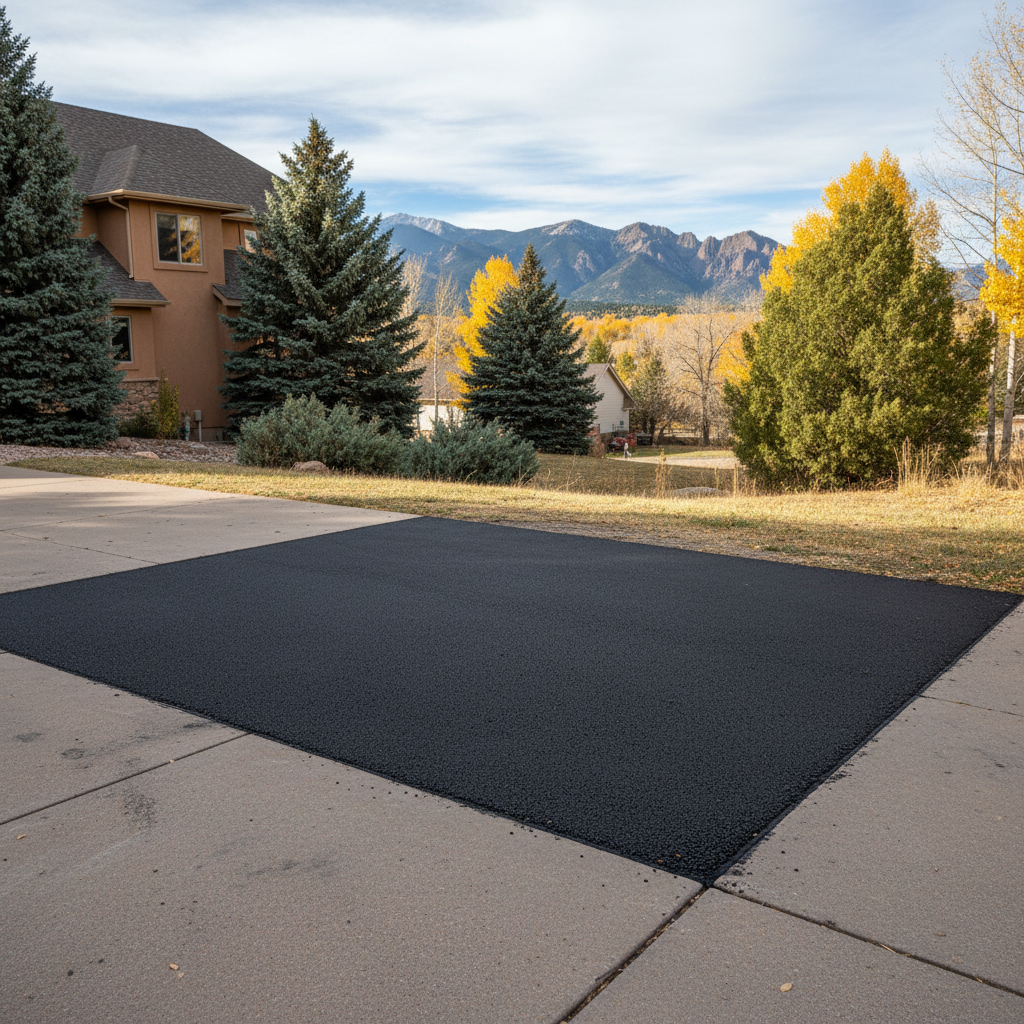
You've got a pothole. Or maybe a crack that's getting wider by the day. It's time for asphalt patching, and you're probably thinking, "How hard can it be?" Well, it can be a lot harder, and a lot more expensive, if you don't know what to look out for. I've been doing this in Boulder for years, and I've seen homeowners make the same mistakes over and over. Let's talk about how to avoid them.
Mistake #1: Ignoring the Root Cause
This is probably the biggest one. You see a pothole, you fill it. Problem solved, right? Nope. Not usually. That pothole didn't just appear out of thin air. It's almost always a symptom of a bigger issue, usually water getting under your asphalt and eroding the base layer. If you just patch the surface without addressing the drainage or the compromised base, that patch isn't going to last. You'll be patching it again, and again, and again.
Think about it: in Boulder, we get those intense spring thaws and summer thunderstorms. If your grading isn't right, or you've got a low spot where water sits, it's going to find its way under your pavement. Especially in areas like the older parts of Newlands or Mapleton Hill, where driveways might be steeper or have less-than-ideal drainage from decades ago. A good contractor won't just patch; they'll investigate why the damage happened in the first place.
Mistake #2: Going for the Cheapest Bid (Without Understanding Why)
Everyone wants a good deal, I get it. But when it comes to asphalt, the cheapest bid is often the most expensive in the long run. There are a few reasons for this:
- Inferior Materials: Some contractors will use lower quality asphalt mix or skimp on the binder. It might look okay for a few months, but it won't stand up to our freeze-thaw cycles.
- Poor Preparation: Proper patching isn't just dumping hot mix in a hole. It involves cleaning the area thoroughly, cutting out weak sections, and often applying a tack coat. Cutting corners here means the patch won't bond properly and will fail quickly.
- Lack of Experience: An inexperienced crew might not know the right techniques for compacting, feathering edges, or dealing with specific types of damage. You're paying for their learning curve.
Always ask what materials they're using and what their process is. If someone's price is significantly lower than everyone else, there's usually a reason, and it's rarely a good one for you.
Mistake #3: Not Getting It In Writing
This sounds obvious, but you'd be surprised how many folks just shake hands and hope for the best. A written estimate or contract should clearly outline:
- The exact areas to be patched.
- The preparation steps (e.g., cutting, cleaning, tack coat).
- The type and depth of asphalt to be used.
- The total cost.
- A timeline for completion.
- Any warranty or guarantee on the work.
Without this, if something goes wrong, you've got no leg to stand on. It protects both you and the contractor. Boulder Asphalt Pros always provides detailed, written quotes so there are no surprises.
Mistake #4: Thinking All Patches Are Created Equal
There are different types of patching for different types of damage. A simple crack fill is not the same as a full-depth patch for a severe pothole. You might hear terms like "skin patching," "infrared patching," or "cut and patch." Each has its place, and a good contractor will recommend the right method for your specific problem.
For example, if you have alligator cracking over a large area, a skin patch might temporarily smooth it out, but it won't fix the underlying structural issue. You might need a more extensive cut-and-patch or even a partial overlay. Don't assume a quick fix will solve a deep-seated problem.
Mistake #5: Not Checking References or Insurance
Before anyone starts work on your property, you need to verify a few things. Are they licensed and insured? This isn't just a formality; it protects you if someone gets hurt on your property or if there's damage to your home during the work. Ask for proof of insurance, specifically liability and worker's compensation.
Also, ask for references. A reputable company will be happy to provide them. Call those references! Ask about their experience with the contractor, if the job was completed on time and budget, and if they were satisfied with the quality. It takes a few minutes, but it can save you a huge headache down the road.
Patching asphalt isn't rocket science, but doing it right takes experience, the right materials, and an understanding of what's causing the problem. Don't let a quick fix turn into a long-term regret. Do your homework, ask the tough questions, and you'll end up with a durable patch that actually lasts.