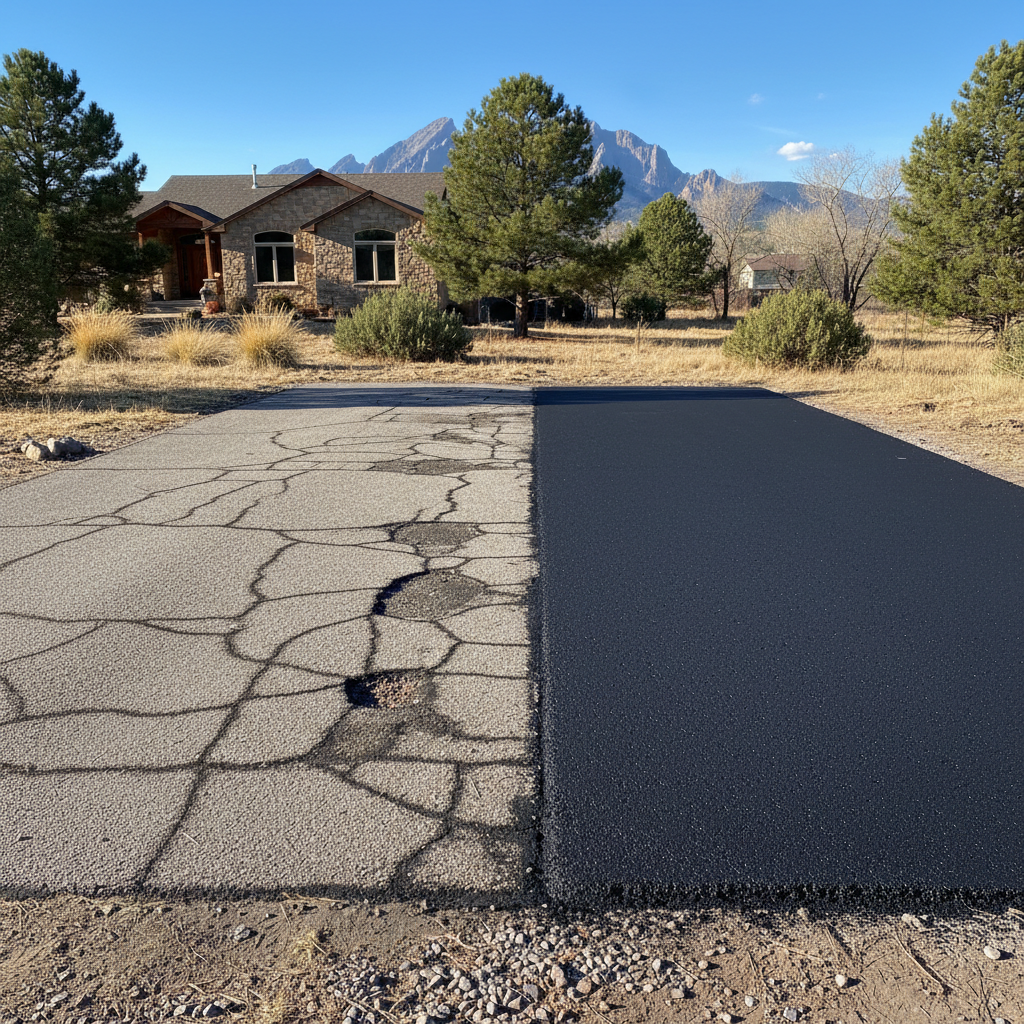
You've got cracks in your asphalt driveway, right? It's a common sight around Boulder, especially after our freeze-thaw cycles. When you see those lines forming, your first thought is probably, 'How do I stop this from getting worse?' You've got two main options for tackling those cracks: crack filling or crack sealing. And yeah, they sound similar, but they're not the same thing at all.
What's the Deal with Crack Filling?
Let's talk about crack filling first. This is usually your go-to for wider cracks, typically a quarter-inch or more. Think of it like putting spackle on a wall. You're trying to fill a void to make the surface look better and prevent water from sitting in there. The material used for crack filling is generally a cold-pour asphalt emulsion or a similar material. It's thicker, almost like a paste.
- It's a quick fix. You can often do it yourself with materials from the hardware store.
- It's cheaper upfront. A bucket of filler isn't going to break the bank.
- It's good for making a surface look a bit more uniform, at least temporarily.
The downside? It's not very flexible. When the ground underneath your driveway moves – which it absolutely does here, especially with our expansive clay soils in areas like Gunbarrel – that rigid filler isn't going to move with it. It'll often crack again, sometimes right next to the original fill, or it'll pop out entirely. It's a band-aid, not a long-term solution for preventing water intrusion.
And What About Crack Sealing?
Now, crack sealing is a whole different ballgame. This is what I recommend for most homeowners, especially for cracks up to about an inch wide. We're talking about a hot-applied, rubberized material. It's heated to a high temperature, usually around 350-400 degrees Fahrenheit, and then poured into the crack. When it cools, it forms a flexible, watertight bond.
- It's incredibly flexible. This is key for Boulder's climate. When your asphalt expands and contracts with temperature changes, or when the ground shifts, that rubberized sealant stretches and moves with it.
- It creates a strong, watertight seal. This is its primary job – to keep water out of your sub-base. Water is asphalt's worst enemy. It gets under the pavement, freezes, expands, and then you get potholes and bigger cracks. Sealing stops that cycle.
- It lasts longer. Because it's flexible and durable, a properly sealed crack will hold up for years, much longer than a filled crack.
- It prevents further damage. By stopping water infiltration, you're protecting your entire driveway structure from deteriorating.
The main 'con' for crack sealing is that it's usually not a DIY job. You need specialized equipment to heat and apply the material correctly. It's also more expensive upfront than just filling, but you're paying for durability and protection.
Boulder Conditions Demand Sealing
Here's the thing about living in Boulder: we get all four seasons, sometimes in one day. We have hot summers, cold winters, and plenty of moisture, whether it's snowmelt or rain. Those freeze-thaw cycles are brutal on asphalt. Water gets into any tiny crack, freezes, expands, and turns a small crack into a big one, or even a pothole. This is why crack sealing is almost always the better investment.
You want to stop that water from getting in. Crack filling might make the crack disappear for a few weeks or months, but it won't prevent water from eventually finding its way in. Crack sealing, with its flexible, rubberized barrier, is designed specifically for that purpose.
When we do crack sealing at Boulder Asphalt Pros, we're not just squirting some stuff in there. We clean the cracks thoroughly – sometimes with air blowers, sometimes with wire brushes – to make sure the sealant adheres properly. Then we apply the hot material, which flows into every crevice and creates that lasting bond.
My Recommendation
If you're looking for a quick, cheap cosmetic fix for very wide cracks that you know you'll be replacing soon anyway, crack filling might be an option. But for any homeowner who wants to extend the life of their driveway, prevent future damage, and genuinely protect their investment, crack sealing is the way to go. It's a more robust, long-term solution that stands up to our local conditions. Don't just cover up the problem; seal it away for good.